

Restoring Beauty on the Bayou
Project Overview & Challenges
This residential landscape renovation was a multi-year project that combined thoughtful design, technical expertise, and hands-on problem solving to transform a mature bayou-side property into a clean, refined, and resilient landscape. The original landscape had been installed over 30 years ago by a previous contractor for a different homeowner. When the new homeowner purchased the property, she envisioned a simpler, easier-to-maintain design—but with the instant maturity and scale of established trees and dense plantings.
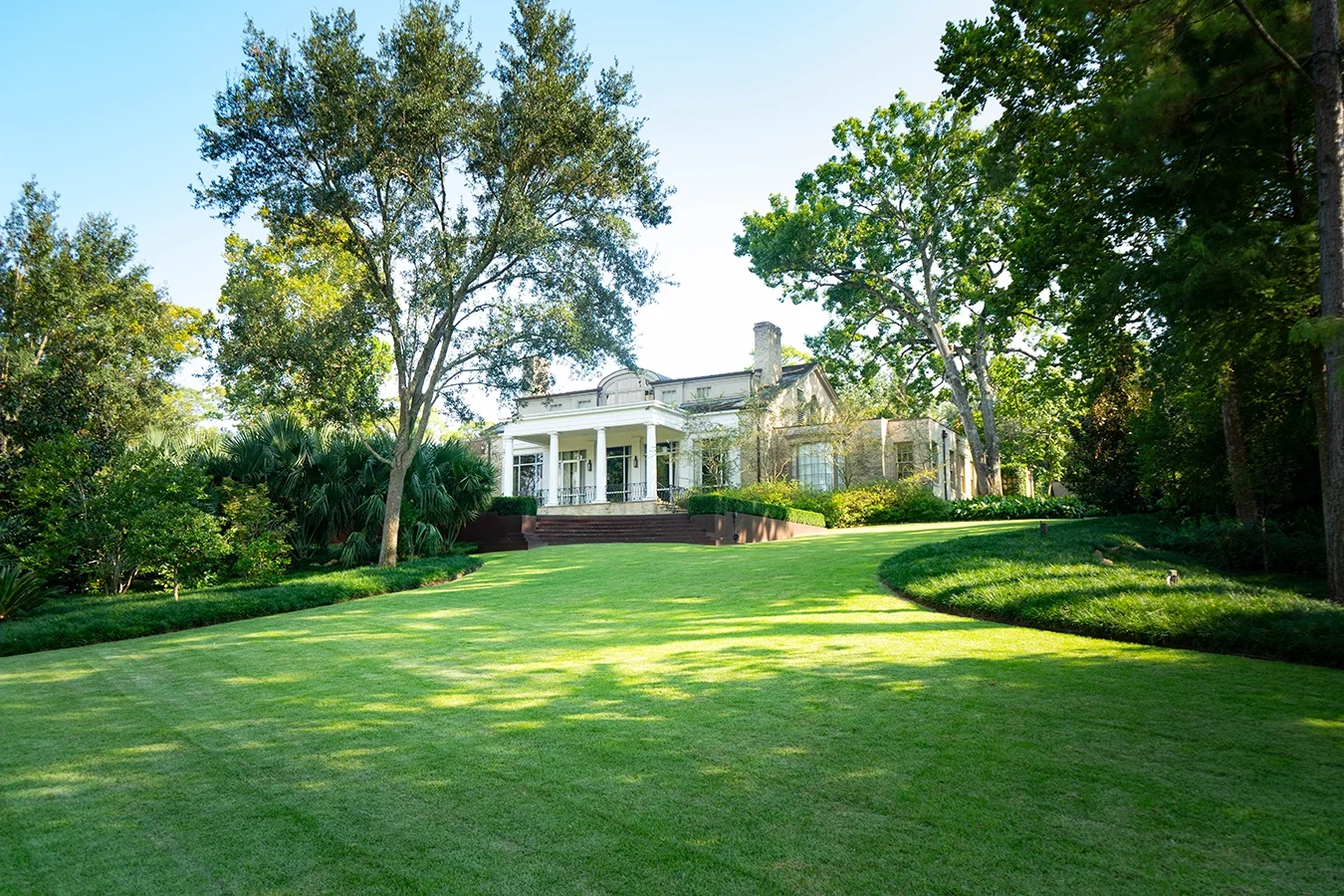
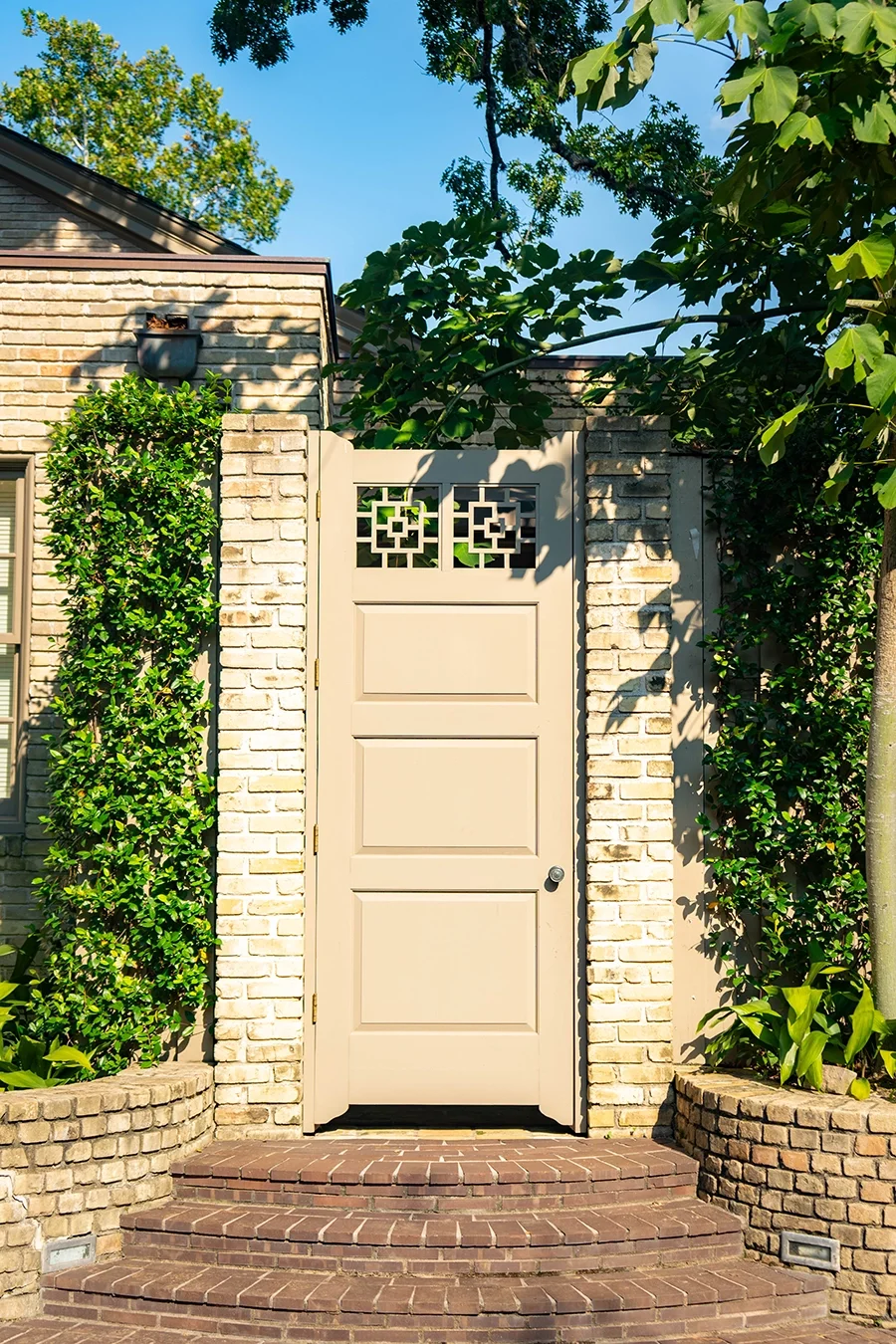
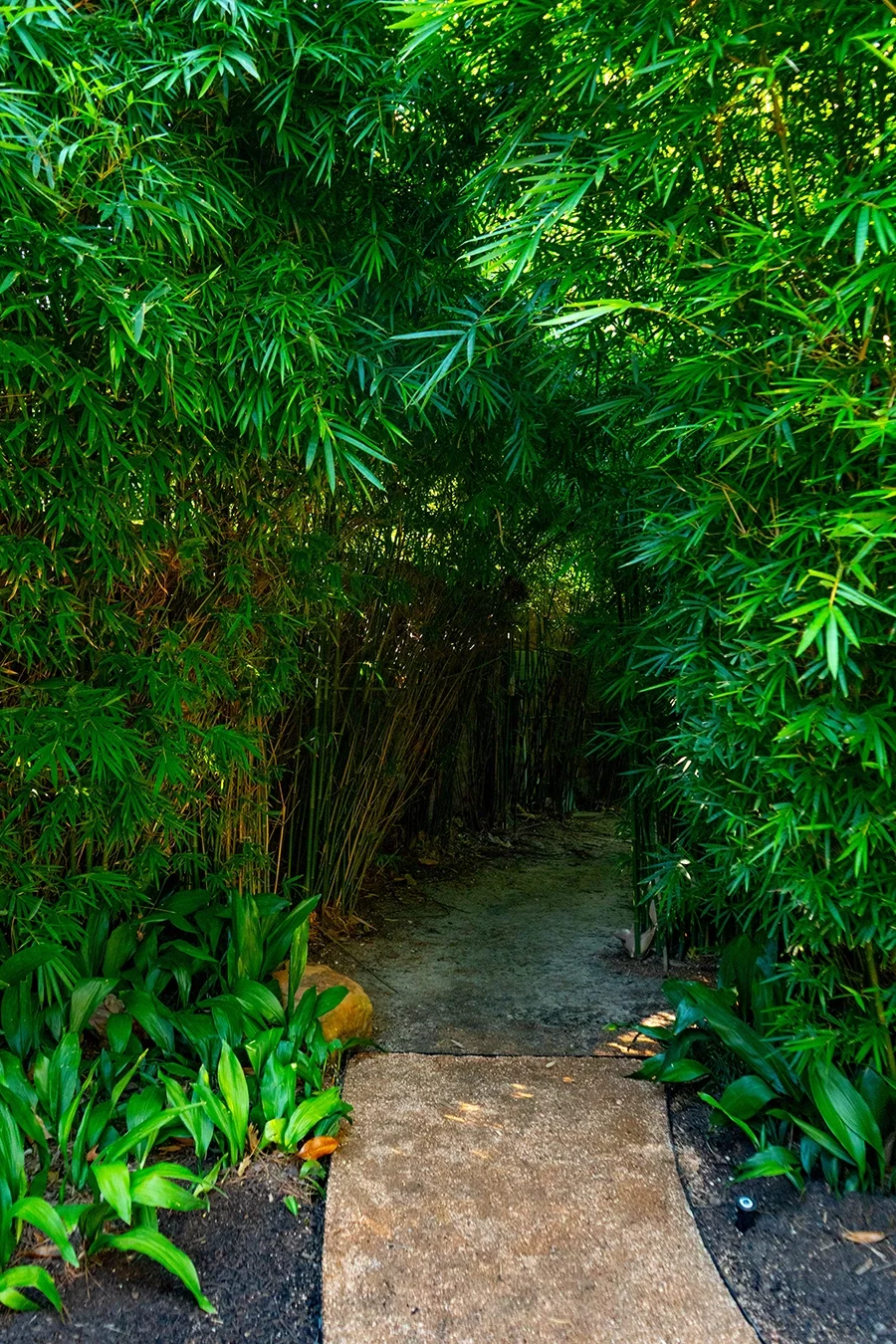
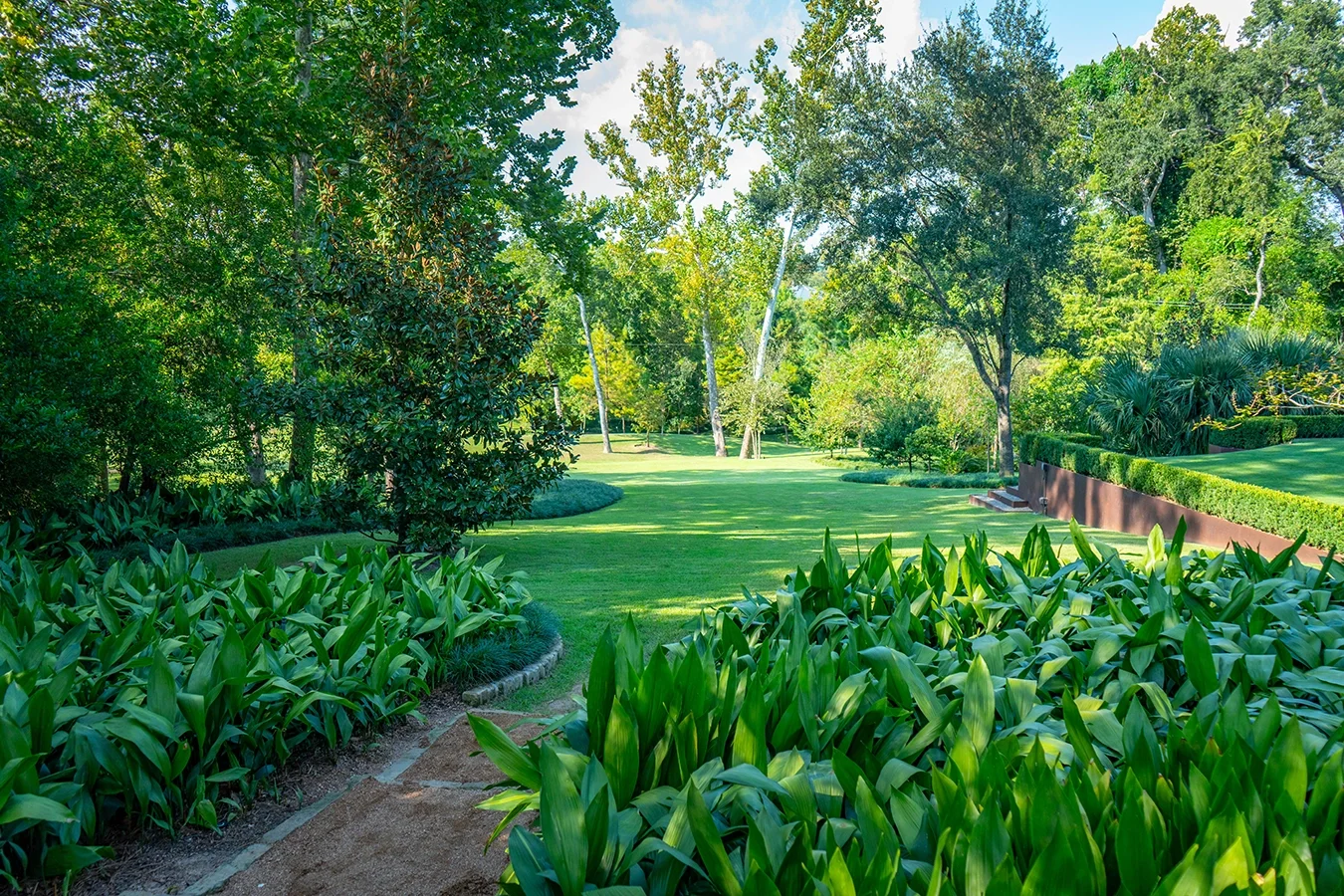
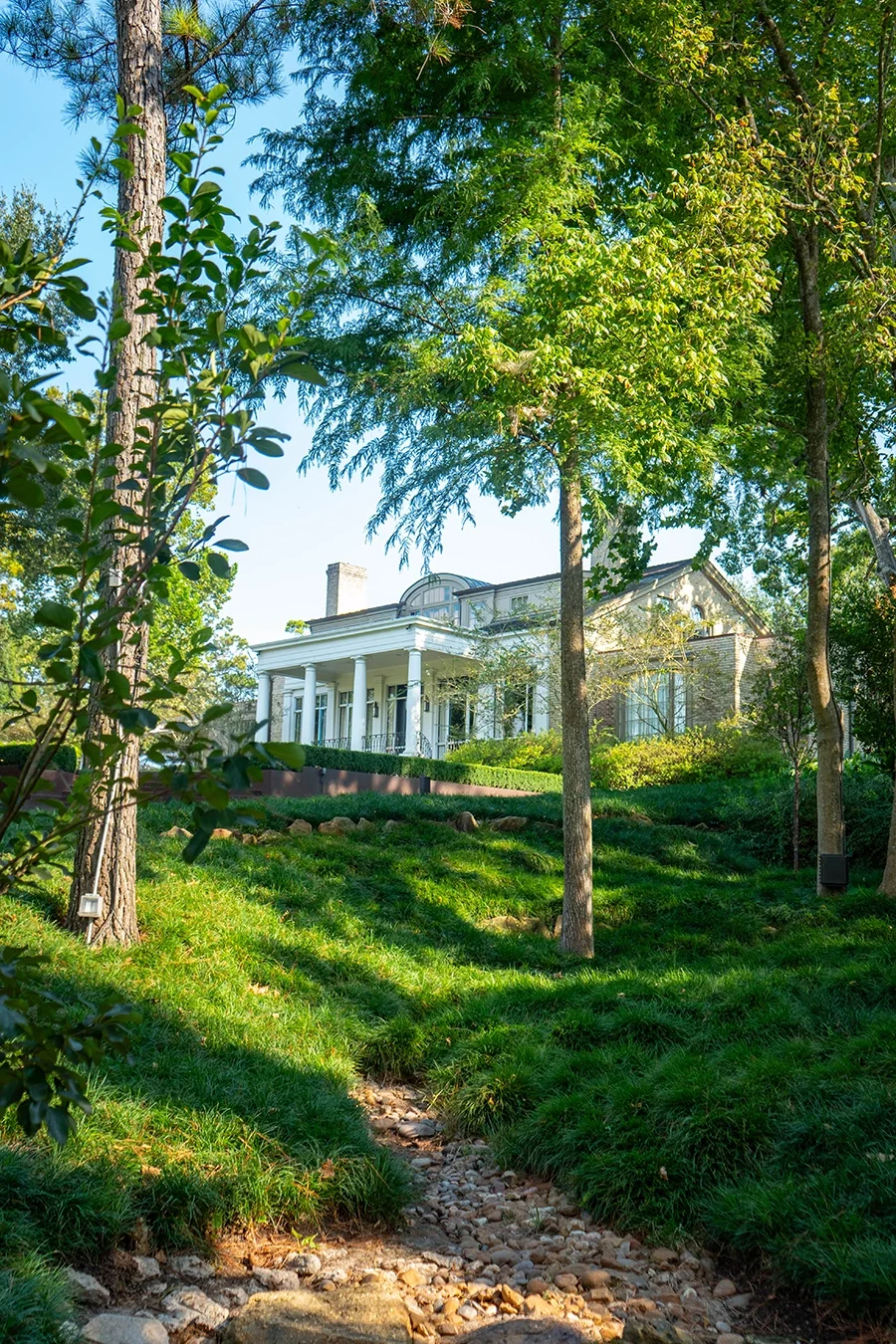
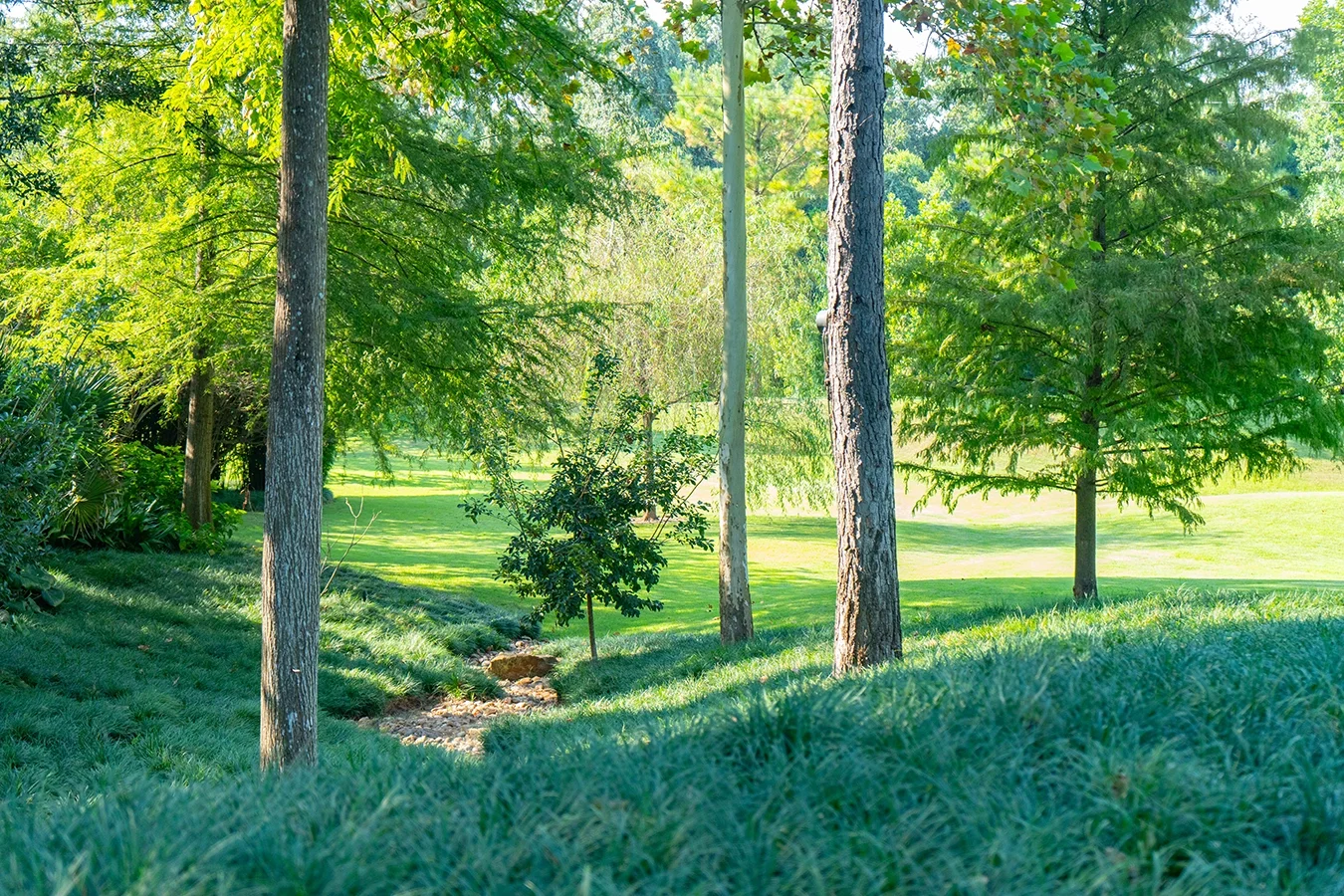
One of the earliest and most significant challenges was site access. The only two entry points to the backyard were 3½-foot gates, allowing at most a 36-inch root ball to pass through. When the client requested larger trees, Hogue Landscape Services coordinated with EDI to bring in a crane, lifting mature trees, equipment, and plywood up and over the house for installation—then repeating the process to remove equipment afterward.
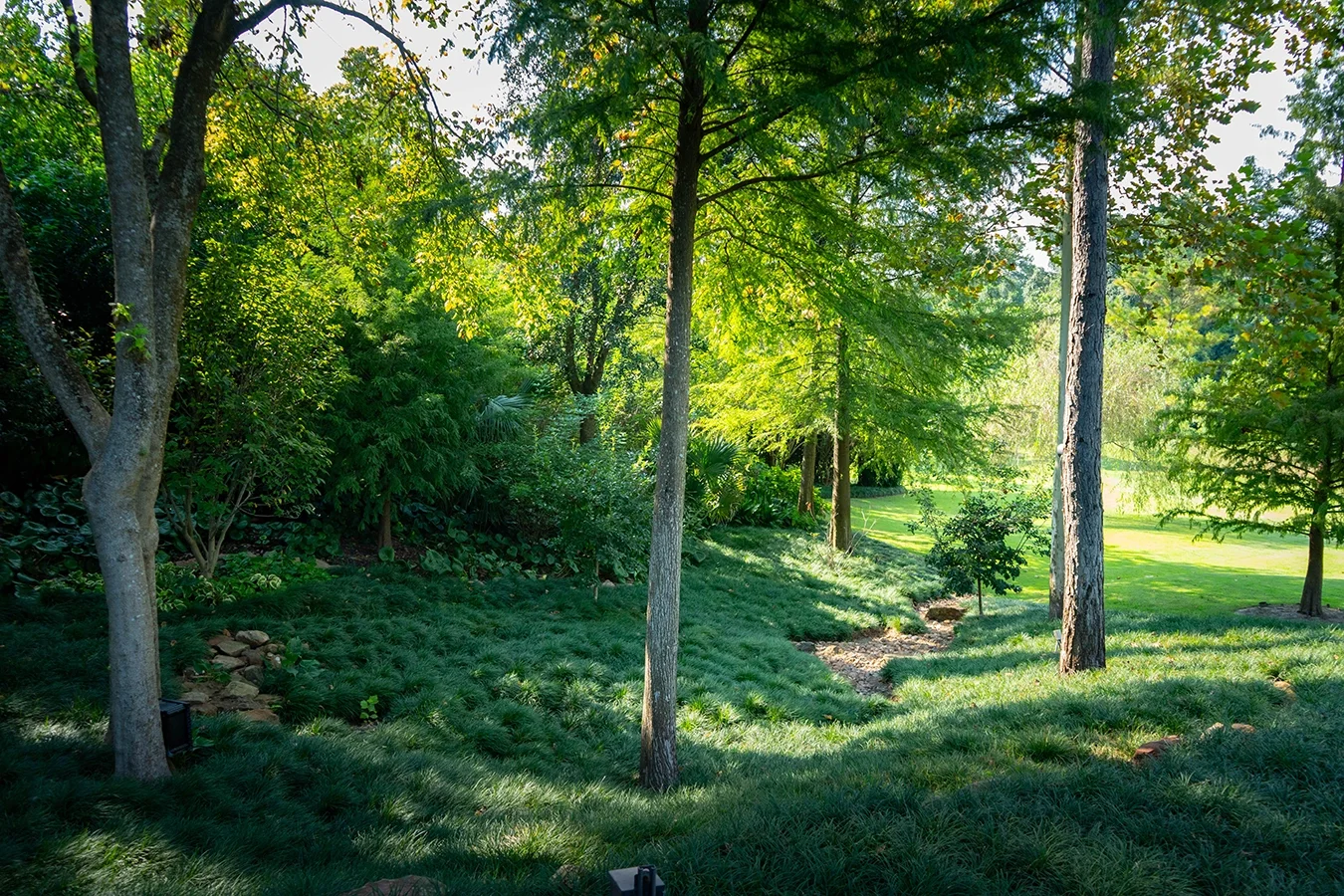
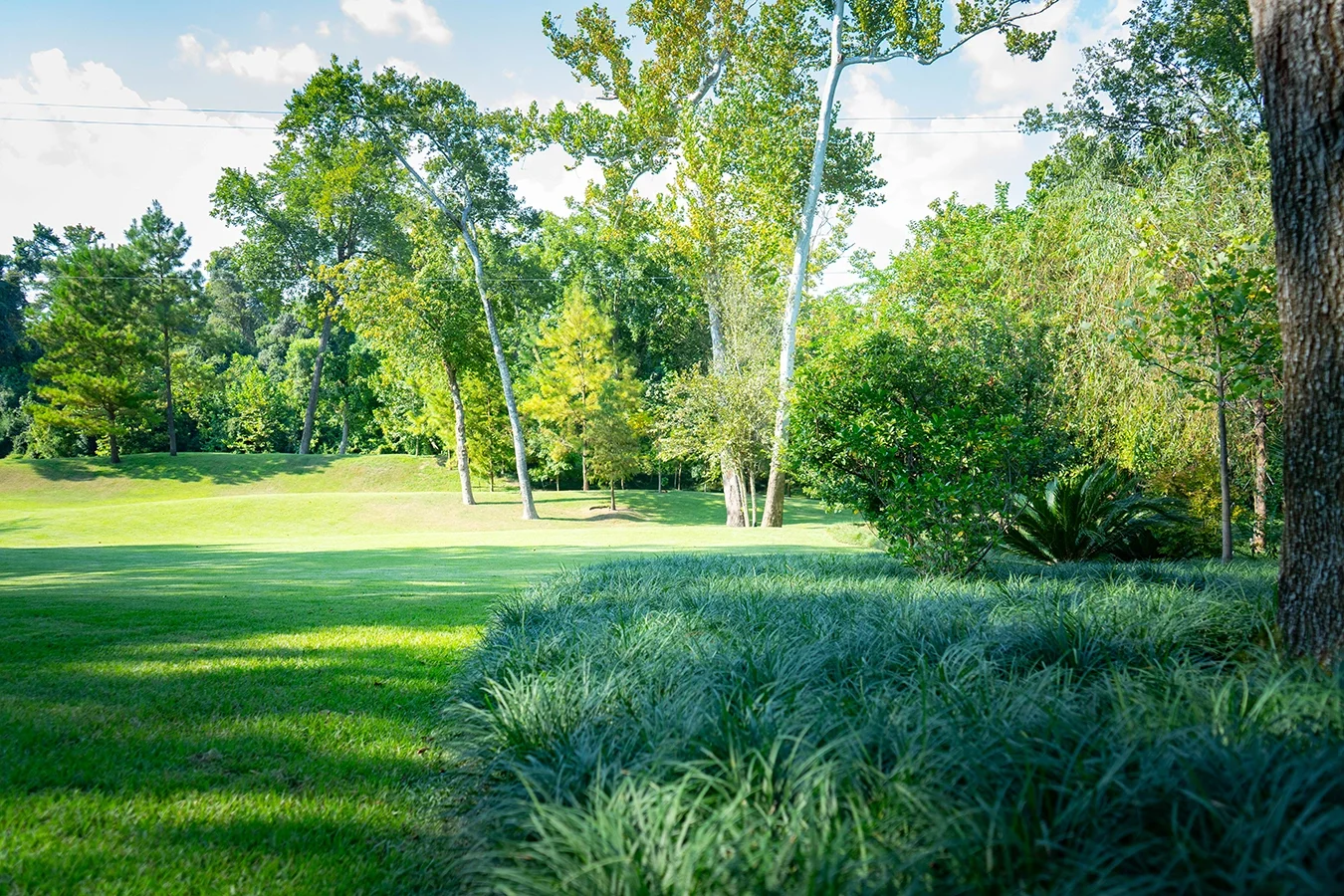
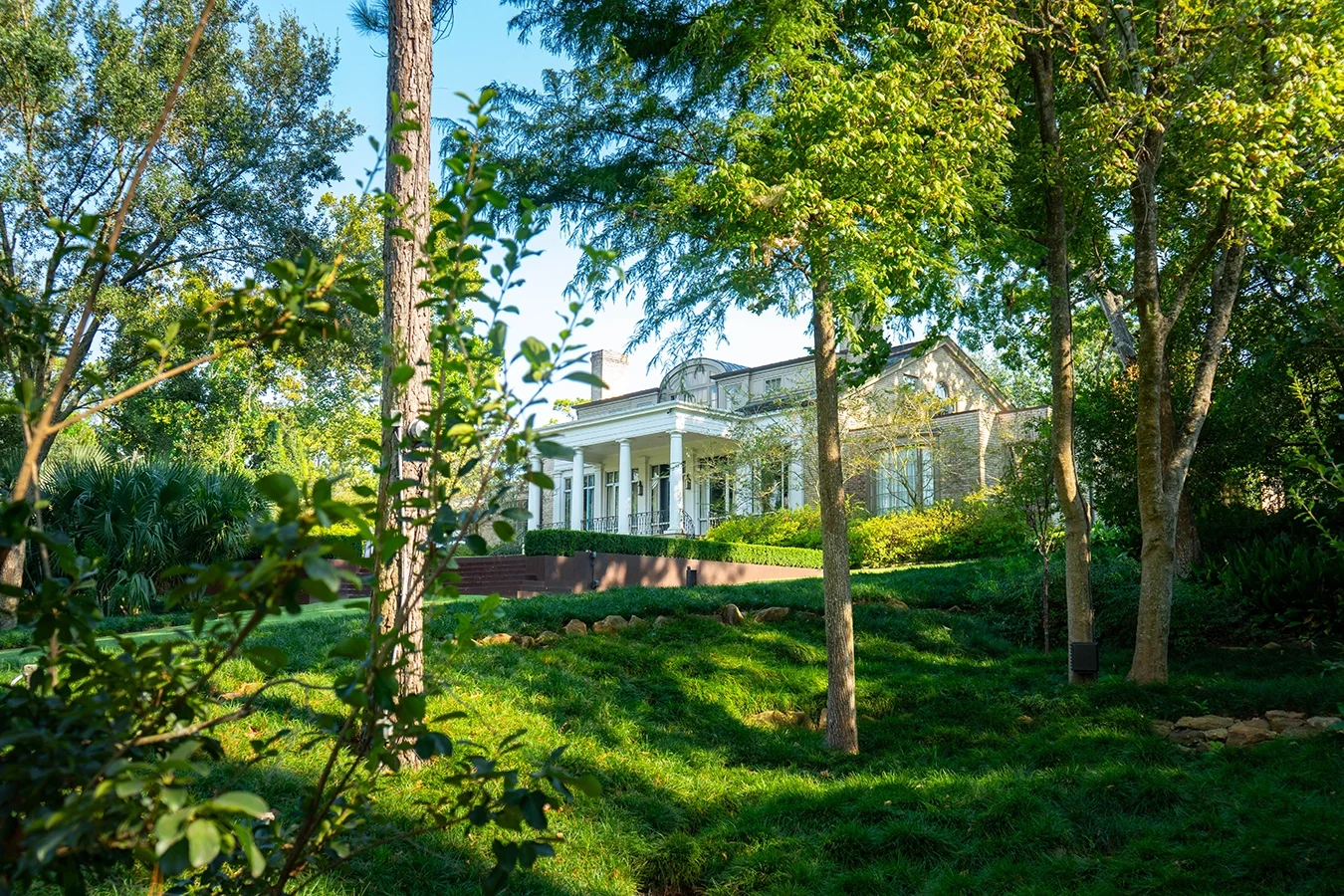
The property’s location on the bayou added another layer of complexity. It is prone to flooding, and during Hurricane Beryl, floodwaters reached within 50 feet of the house. The fully landscaped backyard, which featured bamboo, willows, river birch, maples, and pines, was inundated with water approximately 40 feet high in the middle of the yard. Many plants were knocked down by the surge, requiring crews to reset, clean, and stabilize extensive plantings. Additionally, floodwaters deposited invasive bahia grass seed from a neighboring property into the beds. This invasive grass overtook the monkey grass groundcover, forcing Hogue’s team to eradicate the infestation, replant, and seamlessly blend the new areas with existing beds—an effort that involved installing more than 10,000 new monkey grass plants on top of the original 30,000.
The site’s steep grade—nearly a 60-degree slope down to the bayou—posed major logistical hurdles. With limited equipment access, all soil, debris, plants, and materials had to be moved by wheelbarrow up and down a 300-foot hill. Crews also installed moss boulders to slow stormwater runoff and reduce erosion.
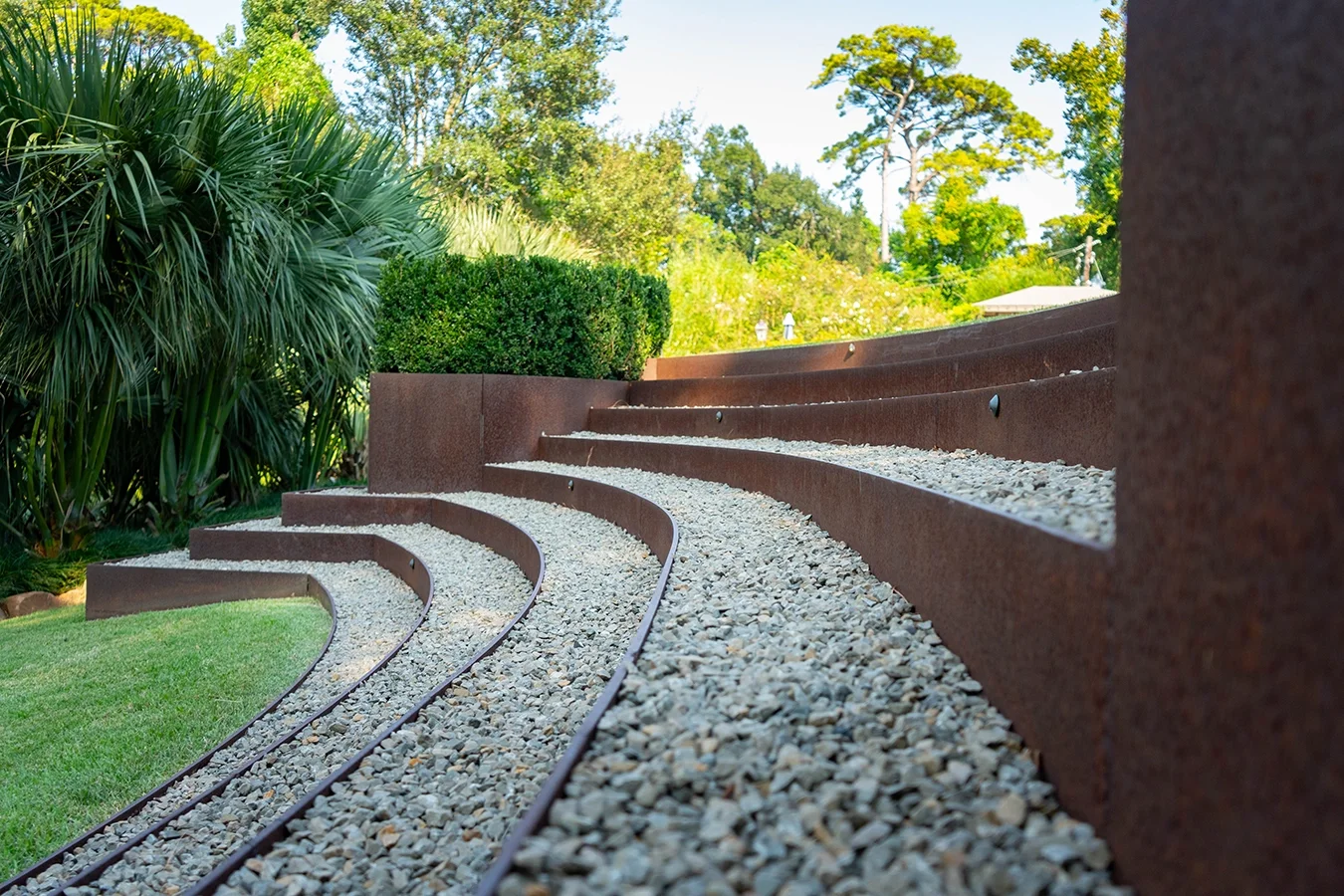
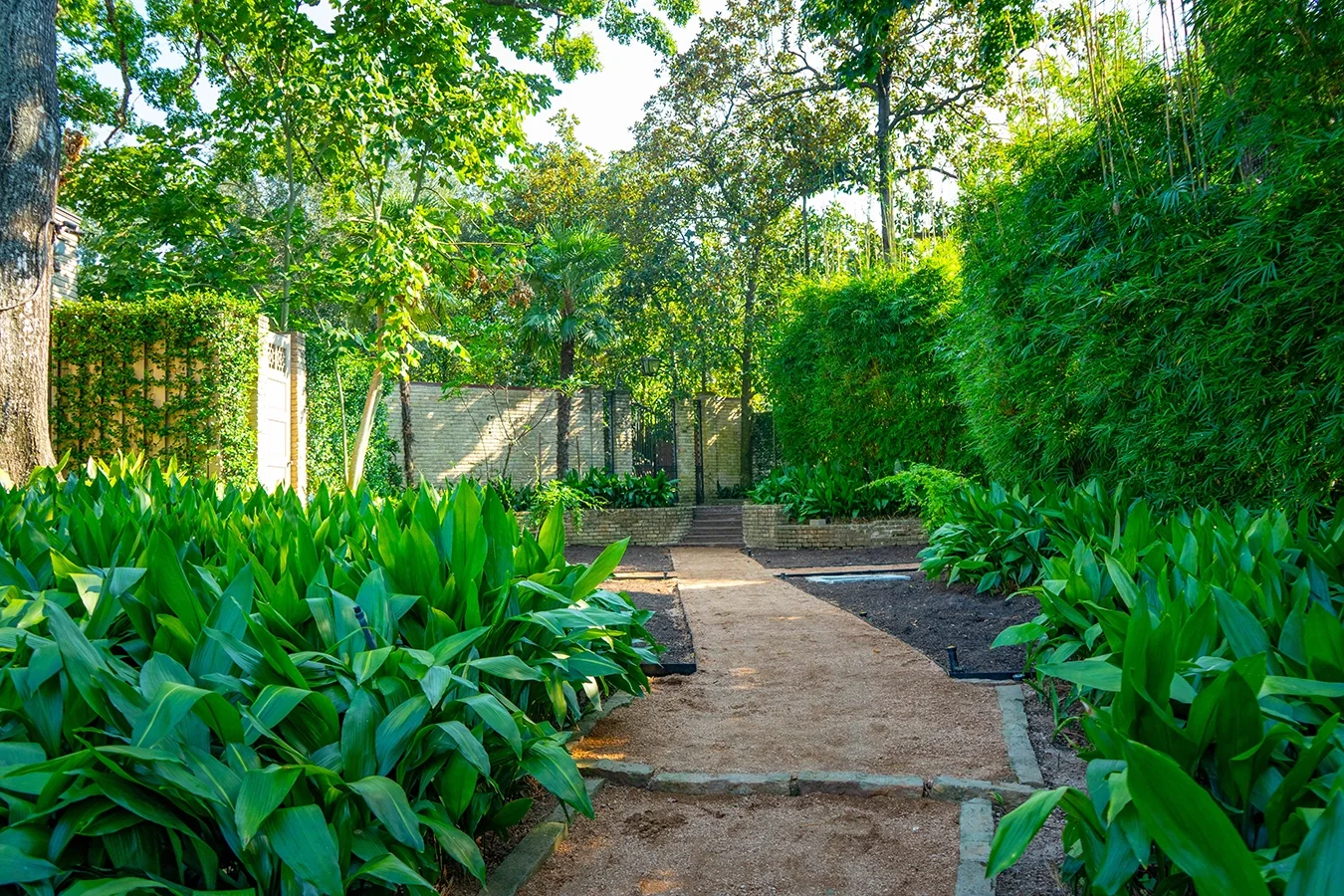
The north side of the property presented additional engineering challenges. A ravine separates the lot from the neighbor’s property, and to retain a granite gravel walkway, Hogue installed large steel retaining walls: 4’×8’ sheets welded to steel poles driven 10–12 feet into the ground, then poured with concrete. These formed oversized planter boxes that were later planted with bamboo to screen neighboring views and power lines.
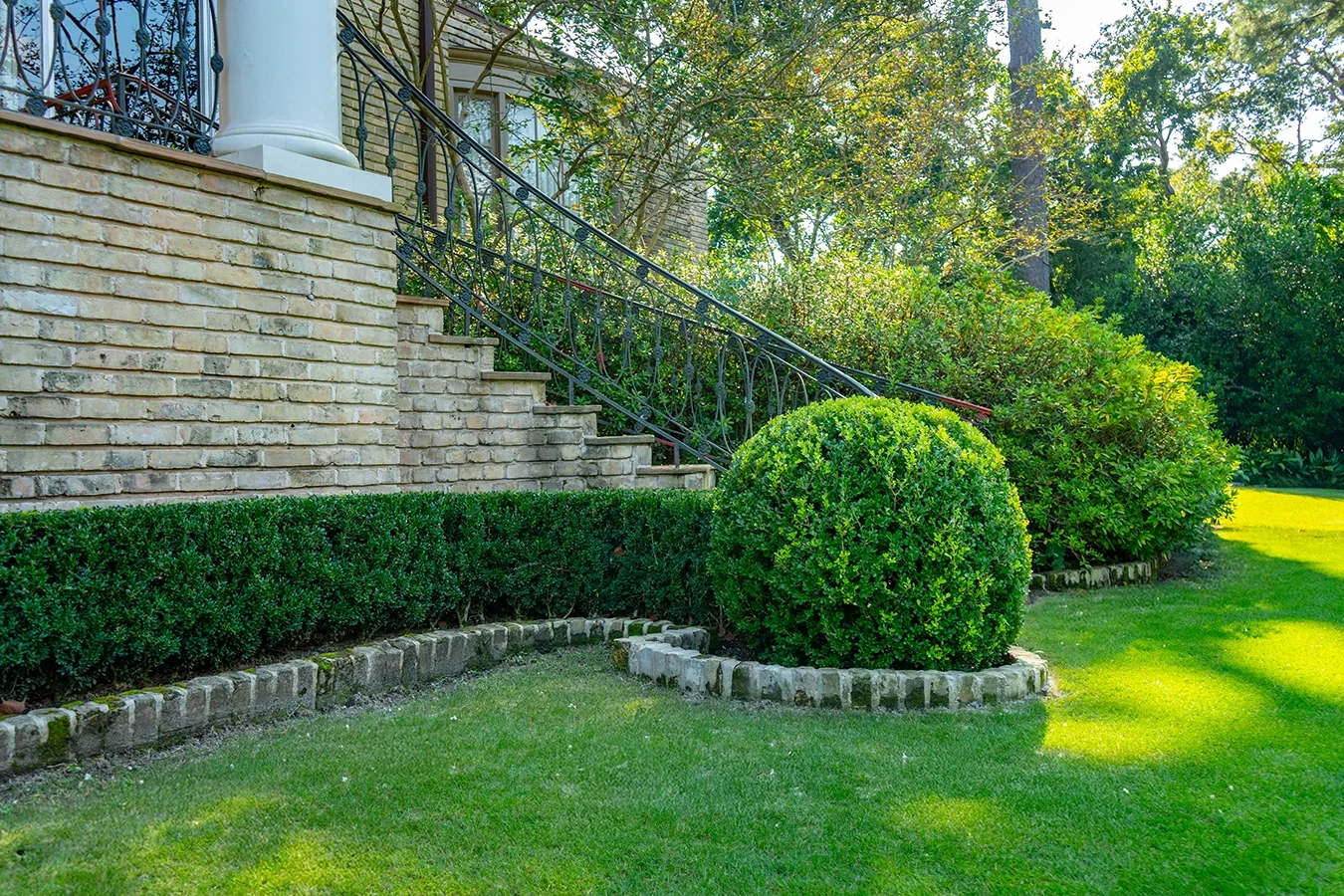
The front yard required immediate visual maturity. Following the 2021 freeze, large plant material was scarce. Initially, 7-gallon yaupons were installed but appeared too small. At the client’s direction, these were replaced with 80 closely spaced 15-gallon yaupons in a double row to create an established hedge. Similarly, boxwoods sourced from Oregon were installed in hedge form for durability against both freezes and heat.
Over two years, this project demanded precise coordination, creative solutions, and extensive manual labor. Every aspect—from flood recovery to invasive species control, steep-slope logistics, mature plant sourcing, and structural installations—required adaptability and expertise. The result is a refined, resilient landscape that reflects both the homeowner’s vision and the Hogue team’s craftsmanship.
Exceptional landscapes don’t maintain themselves.
Partner with a team that brings experience, consistency, and craftsmanship to every detail. Discover what professional landscape maintenance can achieve for your property.